Choosing the material for your welding helmet’s outer shell is more than just a technical choice; it’s a philosophical debate about safety versus comfort . Do you prioritize the all-weather comfort of extreme lightness , or the highest level of protection offered by armor strength ?
A helmet’s overall performance, including its durability, weight, and pressure on your neck, is determined by its core shell material. In today’s professional market, competition is primarily focused on two high-performance thermoplastic materials: nylon and polycarbonate (PC) . Nylon is known for its flexibility and lightweight, while polycarbonate is renowned for its superior impact resistance .
This article will delve into the key differences between nylon and polycarbonate in terms of shell materials, including weight, heat resistance, impact resistance , and cost-effectiveness . By weighing these factors, you will be able to determine which material is the perfect match for your welding process, work environment, and your long-term occupational health considerations.
Part 1: Nylon – The Flexible Aesthetics of the Lightweight King
Specialty nylon materials are often used to create helmets for welders who prioritize minimizing neck strain and ergonomic comfort . It represents a more flexible and form-fitting design philosophy.
of nylon : Unobtrusive fit and flexible design
Featherweight Design: The low density of nylon material significantly reduces the overall weight of the helmet . For TIG or precision welders who need to wear helmets for hours on end, nylon is an ideal choice to alleviate chronic neck fatigue .
Flexibility and Fatigue Resistance: Nylon possesses excellent flexibility, allowing the helmet to deform and absorb energy upon minor impacts instead of immediately shattering. This flexibility also enables it to maintain good performance in low-temperature environments, preventing it from becoming brittle.
Ergonomic potential: Nylon is easier to shape, which helps manufacturers design shell structures that fit the head better and meet the requirements of headband pressure distribution .
of nylon : heat sensitivity and high cost
Heat resistance limitations: Nylon typically has a lower melting point than high-grade polycarbonate. Under extremely high currents or prolonged exposure to high heat radiation (such as heavy-duty FCAW or high-ampere MIG), the nylon shell is at risk of softening or permanent deformation .
Cost considerations: Specialty nylon used in helmets is usually a high-performance nylon composite material , and its initial procurement cost may be relatively high.
Part Two: Polycarbonate (PC) – An Armor-Grade Reliability Barrier
Polycarbonate is a strong and heat-resistant thermoplastic. In the helmet shell industry, it is widely recognized for its excellent impact resistance and its role as a reliable thermal barrier .
of polycarbonate : ultimate strength and heat resistance
Impact Titan: PC is best known for its extremely high impact strength . It effectively withstands impacts from falling objects or high-speed spatter from welding slag, maintaining the integrity of the casing. In construction sites, heavy industry, or high-risk environments , PC provides the highest level of physical protection.
High melting point and stability: PC typically has a higher melting point than nylon. During extremely high-current welding operations or prolonged exposure to radiant heat sources, the PC casing maintains structural stability and resists thermal deformation , thus ensuring the safety of the internal ADF filter.
Cost-effectiveness: Although high-end PC is expensive, its widespread use has made ordinary PC materials a good balance between durability and budget , resulting in high cost-effectiveness.
of polycarbonate : weight and potential brittleness
Relatively heavier: To meet the required strength standards, PC helmets are typically heavier than equivalent nylon helmets . For welders who wear them for more than 8 hours a day, even a difference of a few ounces can exacerbate neck strain .
Low temperature sensitivity (specific grade): Some low-grade or unmodified PC materials may become slightly brittle at extremely low temperatures . Although this has little impact on most working environments, it still needs to be considered when working outdoors in cold regions.
Part Three: Decision Matrix – What Does Your Work Environment Need?
| index | Nylon helmet | Polycarbonate (PC) material helmet | Applicable Scenarios and Priorities |
| Weight/Comfort | Ultra-lightweight (minimizes neck pressure) | Medium to heavy (slightly less comfortable) | The top choice for those who prioritize neck health and require prolonged wear . |
| Impact resistance | Good (high flexibility) | Excellent/Armor-grade (Not easily broken) | high-risk, heavy industry, and high-altitude operations . |
| Heat resistance | Medium (low melting point) | Excellent (high melting point, structurally stable) | Suitable for high-current, long-term continuous welding . |
| Design Features | Flexible and easier to ergonomically shape | Hard and resistant to deformation | It affects the fit between the headband and the outer shell, as well as the wearing experience. |
| Cost-effectiveness | Medium to high (high-performance composite materials) | Budget to moderate (high cost-performance ratio) | PCs typically strike a balance between durability and budget . |
Key Decision: Strength vs. Comfort
Strength First: If your work involves heavy machinery, frequent spatter, or high-current welding, choose polycarbonate . Its high impact strength and heat resistance are your lifeline, and there’s no room for compromise.
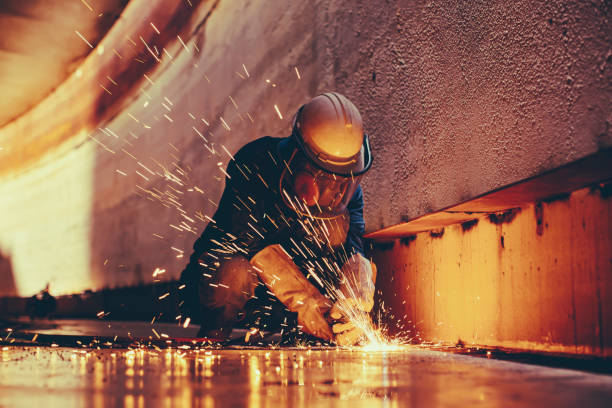
Comfort First: If you mainly do TIG or sheet metal welding, work long hours, and are sensitive to neck pressure, then the lightweight advantage of nylon will greatly improve your work quality and health.
Conclusion and Reflection: Safety Begins with a Deep Understanding of Materials
Choosing the material for your welding helmet is ultimately an investment in your work environment and personal occupational health . It’s not just a purchase decision; it’s a risk management decision.
the comfort, efficiency, and safety of your career . Understanding the difference between the lightness and flexibility of nylon and the armor strength of polycarbonate is essential knowledge for every professional welder.
Reflection and Questions: Given your current workload and environment, do you think you need the lightweight properties of nylon more?