Upgrade your cockpit—turn your tools into a custom workstation
Every welder knows the importance of the cover lens. It’s the “bulletproof vest” for the automatic optical diffuser (ADF), protecting against flying metal sparks and grinding dust. However, if you only focus on the cover lens, you’re missing the opportunity to upgrade your welding helmet from a basic tool into a highly efficient, customized workstation .
Have you ever experienced neck pain due to an ill-fitting headgear ? Have you ever had your welding work interrupted by sweat dripping into your eyes in a hot working environment ? Or have you noticed that your helmet is always front-heavy and prone to slipping off ?
To solve these problems, you need to pay attention to those often-overlooked accessories . This article will reveal four essential upgrade accessories that are key to ensuring your comfort during extended wear , welding efficiency , and long-term health .
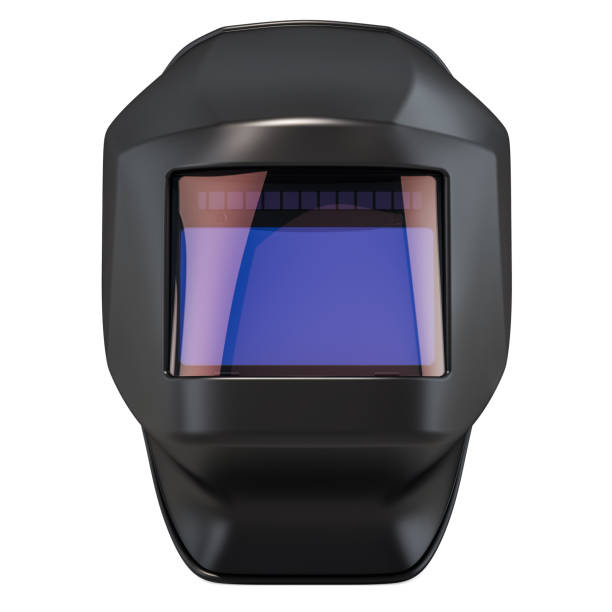
I. Comfort and Hygiene Pillars: From sweat absorption to stress relief
If you work dozens of hours a week under a helmet, then comfort should not be a luxury, but a necessity.
Sweatband (Sweatband) – The Invisible Heroes
Sweatbands are soft, absorbent accessories that come into direct contact with the forehead, typically made of terry cloth or cotton. They play a vital role in ensuring comfort and hygiene .
Key function: It effectively absorbs sweat , preventing it from dripping into your eyes, or worse—flowing into the auto-dimming lenses , causing damage and blurred vision. It also provides a cushioning effect , reducing pressure on the forehead from the head-mounted system .
Health Reminder: Sweatbands are high-consumption items. To maintain optimal moisture absorption and hygiene, it is recommended that you change them regularly , just like you would change socks .
Top Replacement Liner/Foam Filler
These tiny sponge or foam pads, fitted to the top contact points of the headgear system , can significantly improve comfort. Their main function is to distribute the helmet’s weight , preventing it from concentrating on one point and thus effectively reducing pressure on the top of the head .
II. Pillars of Efficiency and Balance: Precision adjustment Head-mounted system
An unbalanced helmet will continuously put pressure on your cervical spine, which directly affects your welding accuracy and long-term health .
Head-mounted system (Headgear) – The core of ergonomics
high-quality head-mounted system is a core component that determines ergonomics ; it should allow for precise adjustments .
Multi-dimensional adjustment: Look for systems with multi-point ratchet adjusters that allow you to adjust not only the head circumference , but also the depth (height) and tilt angle .
Weight Balance: This multi-dimensional adjustment allows you to precisely fine-tune the helmet’s center of gravity , eliminating the front-heavy and back-light imbalance and achieving balanced weight distribution . When the helmet feels like it’s floating on your head rather than pressing down on it, your neck pressure will be greatly reduced.
Rear stabilization components
Some high-end brands (such as 3M Speedglas) offer rear support straps or balance pads:
Dynamic stability: These accessories are designed to further distribute the helmet’s weight rearward , improving its dynamic stability . This means that when you need to look down to inspect welds or weld overhead, the helmet can stay in your intended position and won’t easily slip or wobble.
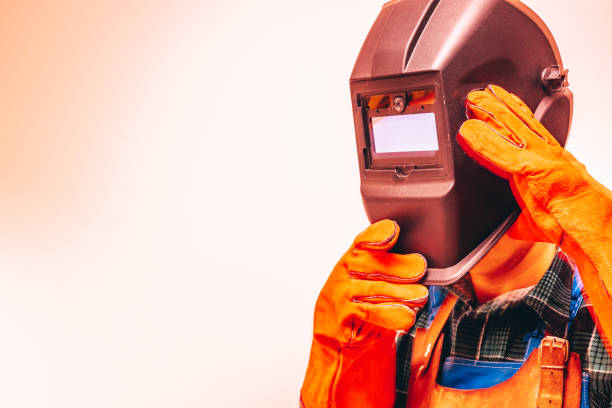
III. Pillars of Safety and Professionalism: Respiratory system integrated accessories
In poorly ventilated or toxic environments (such as those with welded stainless steel or galvanized steel), your protection needs go far beyond lenses and housings.
PAPR Connection components – the highest standard Respiratory protection
If you need to use a PAPR (Powered Air-Filtering Respirator) system, then the following accessories are essential :
Integrated components: The airflow duct (usually with a quick-connect port) and the sealing skirt inside the mask are key to achieving effective respiratory protection in PAPR systems .
Key function: In confined spaces or high-smoke environments, these components ensure that PAPR- filtered fresh air is delivered effectively and in a sealed manner to the inside of the welding helmet under positive pressure , protecting your lung health.
Extended neck/shoulder shield
Function: These additional protective covers , made of fire-resistant materials such as Kevlar fiber , can be attached to the bottom or sides of a helmet, like a scarf.
Advantages: They provide further protection for the welder’s neck, throat, and shoulders from sparks, spatter, and UV radiation , especially when performing overhead welding or industrial welding that requires high current , offering crucial secondary protection.
in conclusion: Invest in Accessories It means investing in your future.
good welding helmet is more than just a good visor. It’s a system that relies on key components such as the headgear, sweatband, padding , and integrated protective components to ensure the welder’s comfort, efficiency, and long-term safety .
Key takeaway: Investing in high-quality components is a shortcut to achieving “customized comfort ,” eliminating work fatigue, and extending helmet lifespan.
Take immediate action: Pick up your helmet and check: Is your sweatband dirty or worn down to the point of not wicking away sweat? If the answer is yes, replace it immediately and consider upgrading to a high-end headband system with precise adjustments . Your comfort is in your hands.