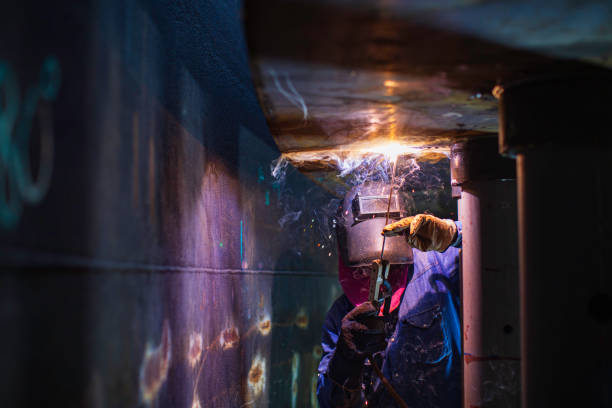
Welcome to the world of welding in confined spaces : dimly lit, poorly ventilated, where your body must contort into unnatural shapes, gripping the welding torch and your body’s support tightly. For pipe welders, ship repair technicians, or any professional working in confined spaces, this is not only a physical challenge but also an extreme test of operability and ergonomics .
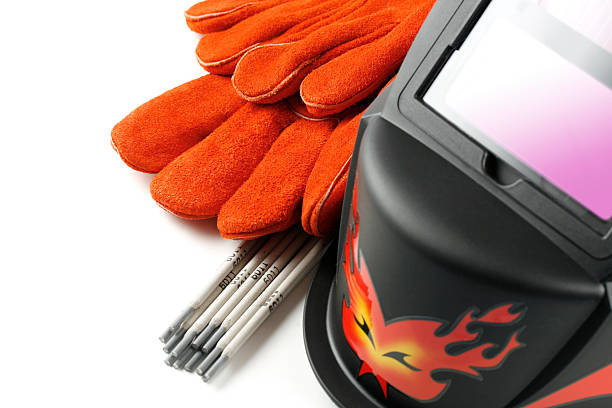
welding mask you choose is no longer just a protective tool, but a key factor that determines your work efficiency and safety .
We often see two types: traditional handheld face shields and modern safety helmet-style welding helmets . Which one can help you cope with the challenges of confined spaces ? This article will compare these two types in practical applications from the perspectives of ergonomics and operability .
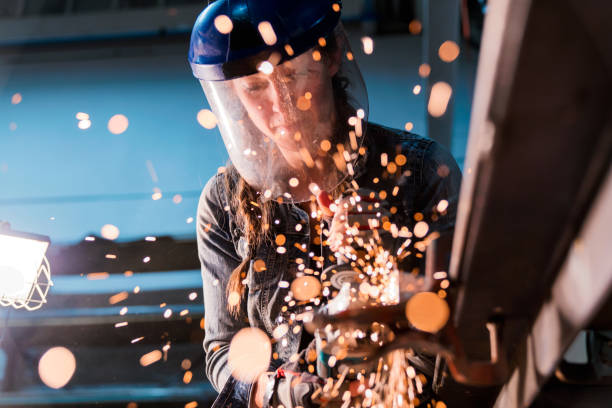
I. Real-world comparison: Differences in operability in confined spaces
In confined spaces, every movement is crucial. The two welding mask designs exhibit significant differences in the following key dimensions:
| Contrast features | Handheld Shield | helmet -style welding helmet |
| Space usage | Minimal advantage. It doesn’t take up head space, allowing for greater head flexibility when crawling in and out. | Size disadvantage. The helmet shell and headgear system increase head size and may get stuck in narrow openings. |
| Operational freedom | Severely restricted. One hand must be used to hold and move the mask, leaving you with only one hand for welding or body support. | Absolute advantage. Completely frees up your hands , which can be used simultaneously to stabilize your body, precisely adjust the welding torch, or operate auxiliary tools. |
| Observation preparation | The movements are complicated: you need to quickly move the mask to your eyes with your hands before drawing the arc , which can easily delay the timing in difficult positions . | Quick and easy: welders can flip down their masks with just a nod or a light touch . This hands-free operation is better suited for maintaining balance and posture in confined spaces . |
| Comfort for prolonged wear | Although it is lightweight, holding it with one hand for an extended period of time can cause rapid fatigue in the muscles of the arm, wrist, and shoulder. | It is slightly heavier, but the weight is distributed across the head through the head-mounted system , which is more ergonomic and conducive to long-term work. |
II. The King of Confined Spaces: Safety helmet welding helmet decisive advantage
For most confined space operations, safety helmet-style welding helmets are the overwhelming winner, as they create a more efficient and safer microenvironment for welders.
Free your “third hand”—ensuring stability and precision
Imagine you’re performing overhead welding inside a narrow pipe. If you’re using a handheld mask , you must use one hand to support your body or stabilize the welding torch, while the other hand is occupied by the mask. This means you can’t use both hands to precisely adjust the angle of the welding torch or maintain your balance .
The helmet-style design frees your hands , allowing you to use them for precise positioning , adjusting feed speed , or firmly gripping supports . This is the cornerstone of ensuring welding quality and safety in demanding operations such as climbing slopes, overhead welding, or hanging upside down .
Adapting to contorted postures Ergonomics
The headgear system of a high-quality welding helmet is designed to accommodate twisting postures .
Precision flipping mechanism: It features a precise flipping pivot and counterweight balance design, allowing you to quickly and accurately lower or raise the mask with slight neck movements , even when your body is in a twisted “pretzel” position , without the need for your hands, greatly improving the reliability of safe operation .
Wearing it for a long time is not tiring: The weight is evenly distributed, avoiding localized pressure and allowing you to maintain focus for longer in confined spaces .
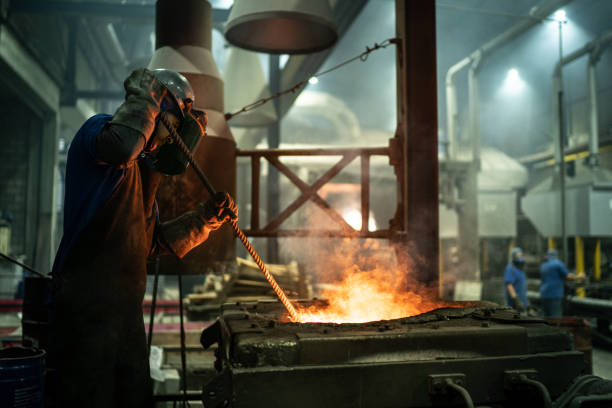
Integrated protection – the only reliable solution for respiratory protection
In confined spaces , ventilation is often the biggest challenge, as contaminant concentrations are extremely high. The helmet-style design provides seamless integration with PAPR (Powered Air-Purified Filtering Respirator) .
Integrated connectivity: PAPR The air supply unit of the respiratory protection system is worn around the welder’s waist and connected to the welding helmet via a flexible air tube , continuously supplying fresh filtered air into the mask.
Absolute safety: In such a high-risk environment, the helmet-style PAPR integrated system is the only reliable solution to ensure breathing safety and combat “welder’s lung” .
III. Handheld face mask The only living space
Although it is completely outclassed in terms of functionality, handheld face masks still retain their “living space” in certain scenarios:
Extremely compact spaces: In extremely confined spaces where even a welding helmet cannot fit , a handheld face shield is the only physical option due to its minimal size .
Emergency and Low Current: As a backup mask for emergency repairs (short-time, low-current welding ), or for low-strength TIG welding at around 20A. In welding , handheld masks offer irreplaceable flexibility and portability .
in conclusion: Your safety is determined by the form you choose.
In the challenge of welding in confined spaces , the core principle is: freeing up your hands means freeing up productivity, and freeing up your hands means freeing up safety .
Safety helmet-style welding helmets are a professional choice for most confined spaces due to their hands-free operation, superior ergonomics, ability to adapt to contorted postures , and integrated respiratory protection .
reassess the suitability of your current welding mask design based on the type of confined space you frequently work in and the frequency of your welding . Your balance, work efficiency, and long-term health all depend on the choices you make.