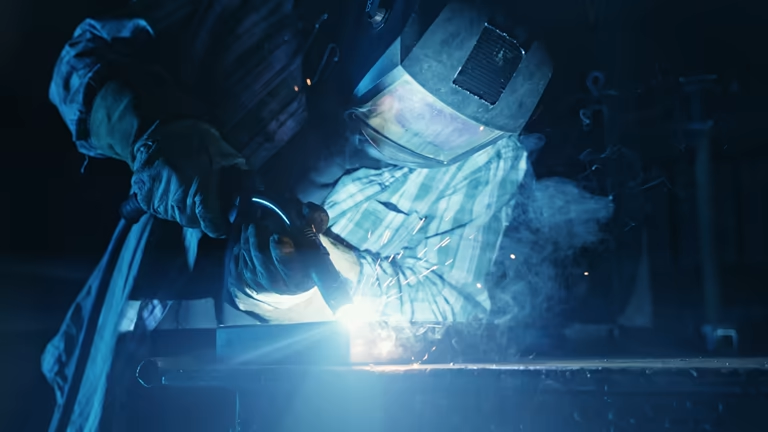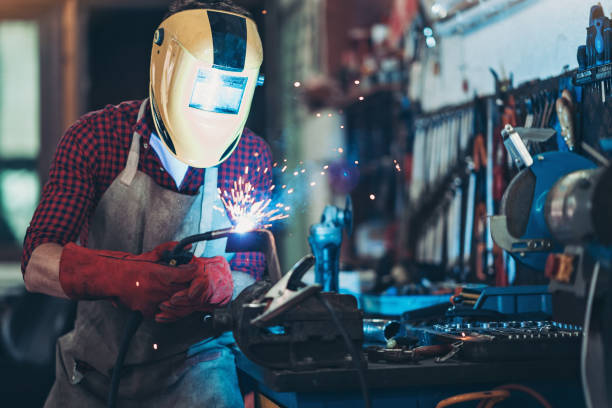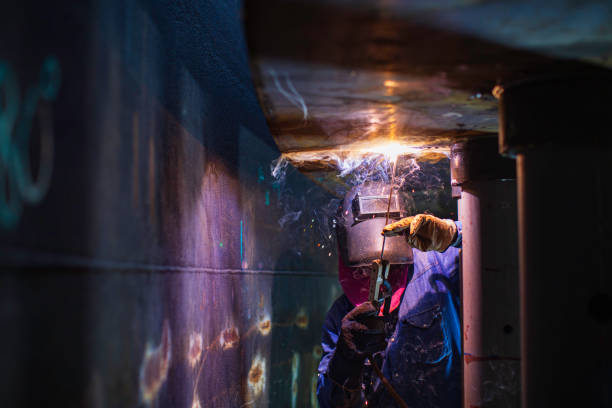
For welders who rely on automated variable-voltage (ADF) welding visors, a stable power supply is a lifeline. The filters need to dim within milliseconds, requiring a reliable energy drive. However, your welding environment —whether outdoors in direct sunlight or inside a dimly lit factory— presents vastly different challenges to the helmet’s power strategy .
You might own a solar-powered welding helmet and enjoy the convenience of “never needing to be charged,” but that convenience could instantly turn into a safety hazard when you venture into a basement or inside a pipe .
This article will provide an in-depth comparison of two mainstream power supply solutions: solar charging and battery power (including pure battery and hybrid power ), analyzing their respective advantages, limitations, and best-suited scenarios to help you develop the most reliable power strategy and ensure that your safety and efficiency are not affected by the environment.
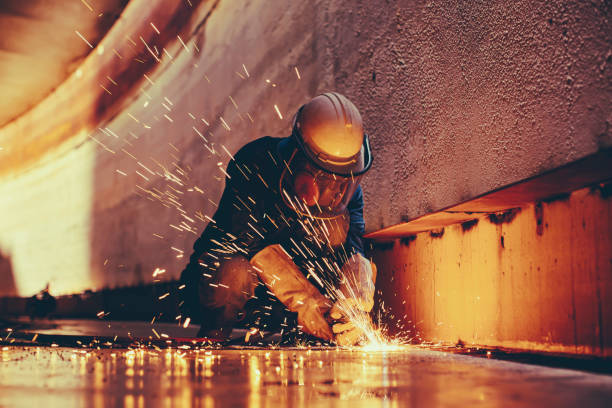
I. Strategy One: Solar charging – a natural advantage of the outdoors.
Solar-powered welding helmets have attracted many users due to their low maintenance costs and environmentally friendly concept.
Working principle and advantages
Core mechanism: These helmets embed small solar panels on the outside of the automatic optical visor (ADF) , and typically have a built-in non-replaceable auxiliary battery. Both arc light and ambient light charge it.
Attractiveness: In theory, as long as you frequently work outdoors or in well-lit environments, you’ll almost never need to replace the battery . This significantly reduces maintenance hassles and long-term costs, making it ideal for sunny, open construction sites or farm environments.
Solar energy Light sensitivity and limitations
However, the advantage of solar energy is also its biggest limitation: light sensitivity .
Environmental challenges: Solar charging efficiency is highly sensitive to light intensity . Charging efficiency drops sharply when operating in dark factory corners, confined spaces, at night, or on heavily cloudy days .
Potential risk: If the auxiliary battery runs out of power due to insufficient light , the helmet’s automatic dimming function may fail or be delayed, resulting in a dangerous “Arc Flash” that could cause irreversible vision damage to the welder.
II. Strategy Two: pure battery power Hybrid power supply – ensuring a stable indoor environment
For welders who need to work in light-limited environments, battery power offers the highest level of reliability .
pure battery power (such as a button battery)
Features: These helmets rely entirely on replaceable button batteries (such as the common CR2450) for power.
Absolute advantage: They are completely unaffected by ambient light . This ensures that the helmet provides stable and reliable light-adjusting performance even in dimly lit environments such as indoors, basements, and pipes , reducing the risks posed by ambient light to zero .
Maintenance considerations: Battery-powered systems require users to regularly check and replace the batteries , which, while slightly more expensive to maintain, offers controllable reliability .
Solar + battery hybrid power supply (the gold standard in professional fields)
Optimal balance: This solution is adopted by most leading professional welding helmet brands (such as 3M and Miller). Solar power serves as an auxiliary charging source, while a replaceable lithium battery acts as the primary power source.
All-weather adaptability: This hybrid power strategy combines the advantages of both: solar power can supplement power and extend battery life when working during the day or outdoors ; while indoors or at night , batteries provide uncompromising stability.
User responsibility: Even with hybrid power , users still need to replace the replaceable batteries regularly . Once the batteries are depleted, the weak current from the solar panels will not be enough to power the dimmer function.
III. Environmental adaptability: How to choose your Power strategy
Choosing your power strategy must be based on the environment in which you most frequently work :
Outdoor and open environments
recommend: Solar-powered helmets can be a budget-friendly, low-maintenance entry-level option.
Risk warning: Even outdoors , if you frequently work in the shade of large equipment or in places blocked by buildings, you should still be wary of the charging risks caused by insufficient light .
Indoor, factory and small space
recommend: Helmets powered solely by batteries or a hybrid of solar and batteries are the only reliable option .
Professional rationale: Indoor lighting is already insufficient, and the welder’s body, tools, or surrounding equipment can easily obstruct the sensors of the light-changing lens , preventing effective solar charging. For high-risk TIG welding (low current, extremely high sensitivity to light ), the stability of battery power is paramount and cannot be compromised.
in conclusion: Reliability is paramount; never rely on luck.
Solar power offers unparalleled convenience and low maintenance costs for welding helmets , but its inherent light sensitivity makes it unsuitable for all working environments. Indoors, underground, or any space with limited light , the reliability provided by battery power is an uncompromising safety guarantee .
Key points: The power strategy of a welding helmet must be precisely matched to your working environment ; you must never let your safety depend on the unpredictable sunlight .
Take immediate action: Check your welding mask instruction manual and confirm your power supply plan. If you frequently work indoors or in dimly lit areas , ensure your helmet uses replaceable batteries and make it a habit to check the battery level weekly !