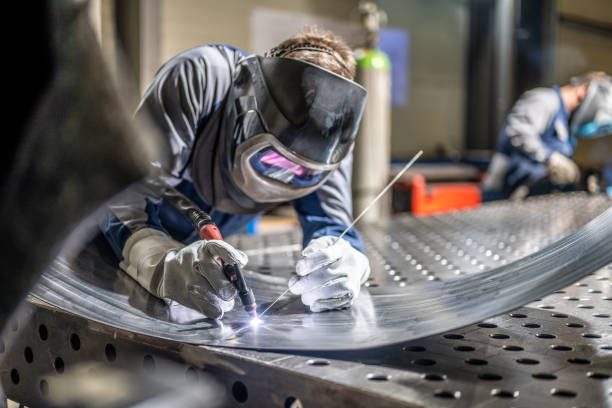
TIG welding (tungsten inert gas welding) is renowned in the welding world as the “surgical procedure.” It is used in aerospace, medical devices, and art, and is famous for its high precision, ultra-cleanliness , and extremely demanding requirements for weld quality . In the world of TIG welding, even the smallest error can lead to catastrophic consequences.
presents a significant challenge to your welding helmet . Traditional MIG or flux-cored welding helmets are simply unable to handle the two unique “tempers” of TIG welding: extremely low arc current and stringent requirements for pre-welding positioning .
Have you ever experienced your helmet hesitating or delaying its brightness adjustment just as you ignite the arc? This is not only frustrating but can also cause a momentary blinding effect. TIG welding helmets specifically designed for TIG welding must possess two core technologies: “low current sensitivity” and “ultra-low brightness shading.” This article will reveal why these two specifications are key differentiators between professional and amateur TIG welding helmets .
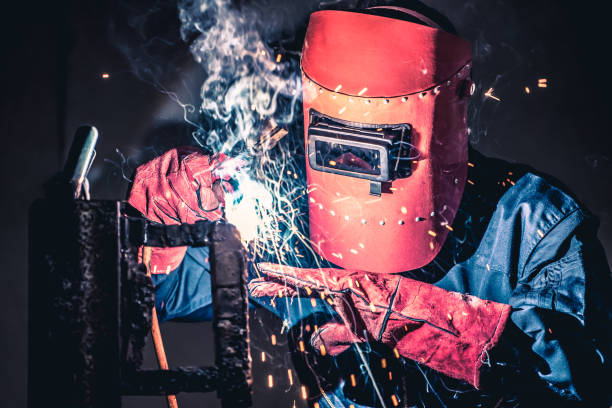
I. Challenging Dim Light: Low current sensitivity Working principle
The most distinctive feature of TIG welding is its “gentleness.” Unlike the dazzling arcs of MIG/MAG welding, which often exceed 100 amps, TIG welding, when welding thin plates or critical parts, can use currents as low as 5 amps or even lower. This is precisely the “ultimate test” for ordinary welding helmets .
Why do regular helmets sometimes malfunction?
the sensors in your welding helmet searching for a firefly in a dimly lit room. A standard helmet is designed to handle “flashlight” level light. But what about the faint “firefly” level arc light of TIG welding?
Light change delay: The sensor cannot quickly determine whether the trigger threshold has been reached, resulting in a delay in light change and exposing your eyes to sudden bright light.
Dimming failure: Under extremely low current conditions, the helmet may be completely “asleep” and will not trigger the dimming function at all.
The “Super Sensitive” Upgrade of the TIG Helmet
Low current sensitivity refers to the ability of the photoelectric sensor in a TIG welding helmet to capture and respond to extremely weak arc light .
Professional TIG welding masks achieve ultra-sensitivity through the following methods:
Increase the number of sensors: Use 4 or more precision sensors to provide full coverage of the field of view and ensure that the arc light is not blocked by the welding gun or hand.
Optimize circuit design: Adjust the internal control circuit and reduce the trigger voltage so that the system can be activated by a weaker light signal.
High-sensitivity components: Utilizing higher-specification photodiodes improves the efficiency of capturing low-brightness light.
Its practical value is obvious: even if you are welding a 0.5mm thin stainless steel sheet and the current is set to single digits, your TIG welding helmet can reliably darken within milliseconds, just like a professional bodyguard.
II. Improving Positioning Accuracy : The Secret to Ultra-Low Brightness Opacity
TIG welding is an art of precise positioning . Before you ignite the arc, you need to perfectly align the tungsten electrode tip with the weld bevel and observe the edge of the molten pool throughout the process. How can you achieve such precise positioning if your helmet looks like a black sheet of glass when the arc is not ignited?
Say Goodbye to “Tunnel Vision”: From DIN 4 to DIN 2.5
Light State Shade refers to the transparency of an argon arc welding helmet when not in use. Traditional MIG/MAG welding helmets typically have a light state shade around DIN 4. Imagine wearing medium-strength sunglasses on a sunny day; you’ll experience a slight **”tunnel vision”**.
Professional TIG welding helmets, on the other hand , aim for ultra-low glare , reaching DIN 3.0 or even an astonishing DIN 2.5 .
Visual Effects: DIN 2.5 lenses are almost like transparent sunglasses, providing extremely bright vision. Combined with natural color rendering technology , this combination allows you to clearly see the true colors of your surroundings, significantly eliminating “tunnel vision . “
How to improve TIG welding precision at critical moments?
Tungsten electrode and weld positioning: The extremely low brightness allows you to clearly see the tip of the tungsten electrode and the marking lines on the weldment , ensuring perfect positioning accuracy before arc striking .
Continuous observation of the weld pool: During TIG welding, the ultra-low brightness shading allows you to observe the addition of welding wire and minute changes at the edge of the weld pool more comfortably and clearly , enabling precise control of heat.
Reduced visual fatigue: A bright field of vision reduces the burden on the eyes’ accommodation. Imagine if you didn’t have to experience the intense visual shock of “bright-dark-bright” before and after each arc; your work stability and endurance would be greatly improved.
III. Other Key Considerations for TIG Welders
a TIG welding helmet involves more than just combining technical parameters; ergonomics must also be considered.
Optical quality (1/1/1/1): For high-precision welding, the helmet with the highest optical grade must be selected to ensure zero distortion and zero blur in the field of vision. This is a hard requirement for observing the details of the molten pool.
Comfort and Balance: TIG welding often involves prolonged sitting. The helmet’s weight balance and the comfort of the headgear system are crucial, as they can significantly reduce neck and shoulder fatigue.
Respiratory protection compatibility: Welding special materials such as stainless steel can produce harmful fumes. Choosing an argon arc welding mask that is seamlessly compatible with respiratory protection systems such as PAPR (Powered Air Purifying Respirator) is essential for ensuring long-term health.
Conclusion: Professional tools lead to professional skills.
TIG welding is about meticulous attention to detail, and your welding helmet is the key tool to achieving that.
Investing in a TIG welding helmet with low current sensitivity and ultra-low glare is like equipping your high-precision skills with the sharpest eyes and the most reliable protection . The former ensures reliable protection , while the latter guarantees operational precision .
Please carefully check whether your current TIG welding mask meets DIN 3.0 or lower for bright-state shading. If not, it may be time to upgrade your equipment and take your TIG welding skills to the next level.
Which technical feature of a TIG welding helmet do you think has the greatest impact on your daily work efficiency? Feel free to leave a comment below and share your experience!