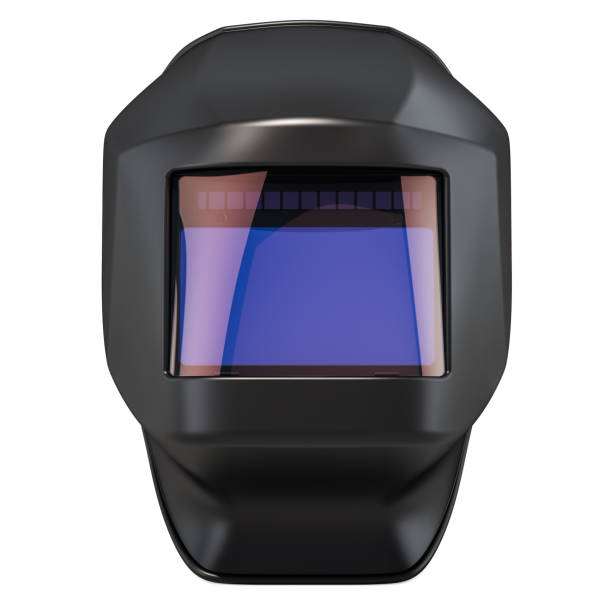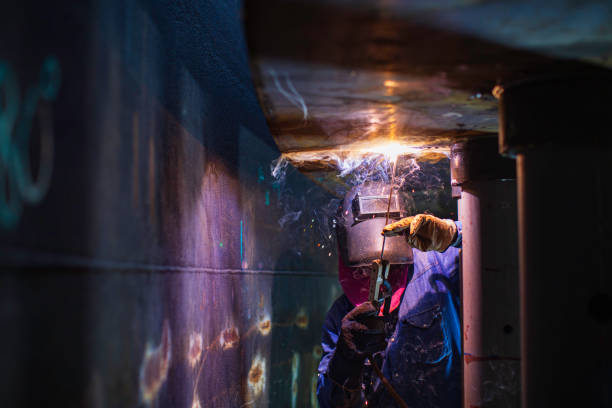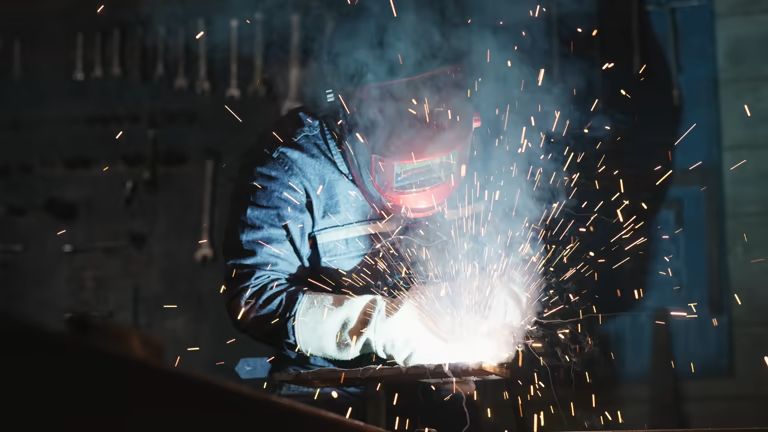
When the arc light illuminates, your automatically dimming helmet dims within milliseconds. It may seem like magic, but it’s backed by precise science. The core function of a welding helmet is to filter out all harmful UV/IR radiation from the arc light while providing enough visible light to allow you to see the molten pool .
Many welders (both beginners and experienced) make a common mistake: they believe that the darker the shade level, the safer it is. However, incorrect shade level settings can lead to blurred vision, difficulty in distinguishing the boundaries of the weld pool, and rapid eye fatigue , thus severely slowing down your welding efficiency .
This article will delve into the scientific significance of DIN grades (the light-shielding standards set by the European Organization for Standardization ), and focus on distinguishing the practical applications of low light-shielding ranges (DIN 5-8) and high light-shielding ranges (DIN 9-13), teaching you how to maximize your welding efficiency by using the correct light-shielding settings.
I. Scientific Basis: DIN grade The physical meaning of shading
Choosing the correct DIN grade is not a matter of gut feeling; it is a precise science.
DIN grade What is it?
DIN rating is a numerical standard used to measure the ability of a welding helmet filter to reduce the amount of light transmitted through it .
Numerical meaning: A higher DIN grade number means lower light transmittance and a darker field of view. For example, a DIN 13 filter is darker than a DIN 9 filter and is suitable for higher intensity arc light.
Core principle: Your eyes need an “optimal brightness window” —one that filters out more than 99.9% of harmful light while retaining enough visible light so that you can clearly observe the color changes, flow state, and wire feeding of the molten pool.
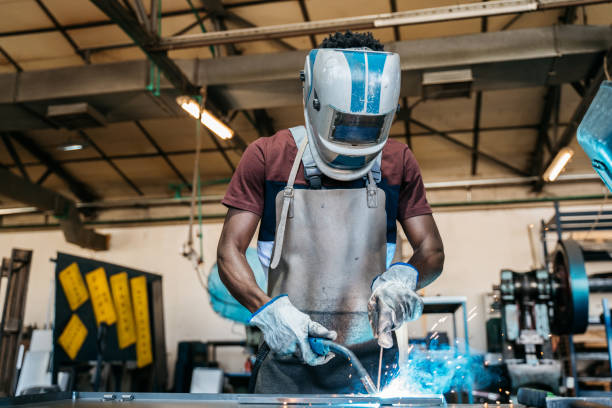
Light blocking and Welding current Correspondence
DIN grade is strictly positively correlated with welding current (amperes): the higher the current and the stronger the arc light, the higher the required DIN grade.
Rule of thumb: Most professional helmet manufacturers provide a chart to guide users in selecting the appropriate shading level based on different processes and current ranges, such as MIG/TIG/Stick . Always refer to this chart when starting a new process or current setting.
II. Adjustable Range 1: DIN 5-8 – “Low shading” Multifunctional applications
DIN 5 to DIN 8 are the “secret weapons” of many multi-functional welding helmets . These are not the main battleground for welding , but rather the golden zone for cutting and precision work .
Why is it necessary? DIN 5-8 ?
This “light shading” range is intended to provide you with a clear and safe field of view during high-brightness operations such as non-arc welding: Plasma Cutting. Plasma cutting produces a weaker light beam than high-current MIG or Stick welding . Using DIN 5 to DIN 6 allows the operator to clearly see the cutting line and indicator beam, enabling more precise cutting and avoiding cutting deviations caused by insufficient light.
Oxy-Acetylene/Brazing: This type of flame operation requires moderate light intensity; DIN 5 to DIN 7 are ideal. This brightness level allows you to accurately observe the flame color (to judge temperature) and the heating state of the metal , which is crucial for ensuring brazing quality.
Impact on work efficiency
In these delicate operations, precision equals efficiency . DIN 5-8 provides optimal clarity , allowing for seamless transitions from cutting to welding without removing your helmet , avoiding operational errors and recuts caused by insufficient light.
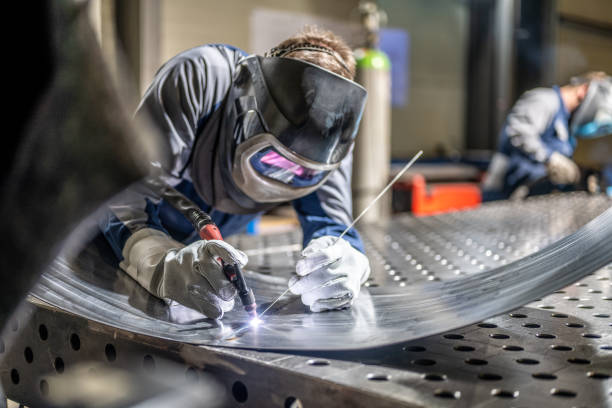
III. Adjustable Range Two: DIN 9-13 – High Current welding main battlefield
This is the range within which your auto-dimming helmet can deliver its core value for everyday arc welding .
H3: Why is DIN 9-13 required?
This is a heavy shading range, specifically designed to handle medium to very high intensity arc light:
Medium and low current: DIN 9 to DIN 10 are suitable for most standard MIG welding and low-current stick welding .
High current and special process: DIN 11 to DIN 13 are suitable for high-current MIG/Stick welding , flux-cored welding, and high-current TIG welding .
Impact on work efficiency
Within this core scope, choosing the appropriate DIN grade is crucial for efficiency .
Molten pool clarity: The DIN rating is set just right , allowing you to clearly see the shape of the molten pool, color changes, temperature status, and precise wire feeding .
If it is too dark (too much light): you will not be able to see the edge of the molten pool, which can easily cause uneven welds or weld deviations.
If it’s too bright (insufficient shading): your eyes will feel stinging and tired, forcing you to stop soldering , and in the long run, it will damage your eyesight .
in conclusion: Flexible adjustments to maximize efficiency
Modern welding helmets offer a wide range of adjustability from DIN 5 to DIN 13 , providing a versatile work platform . Mastering the flexible adjustment of shading is a key skill that distinguishes modern welders from amateurs.
Every fine-tuning of the light-blocking level is about finding the best balance between safety and clarity , thereby maximizing your welding efficiency and control over the weld pool .
Take immediate action: Before your next soldering session , don’t blindly use the default settings. Try fine-tuning the light shielding to find the **golden DIN grade ** that best suits your current and process , and write it down! You’ll be amazed at the efficiency improvements that clarity brings.