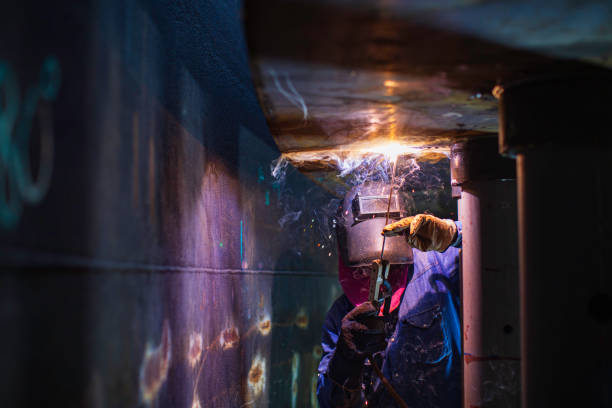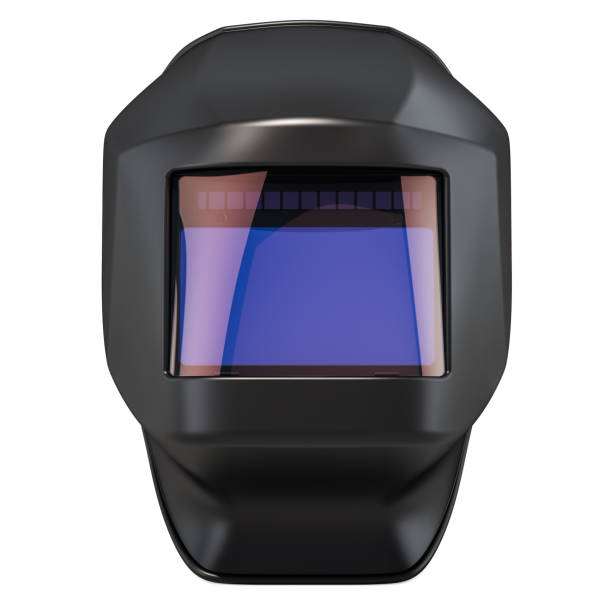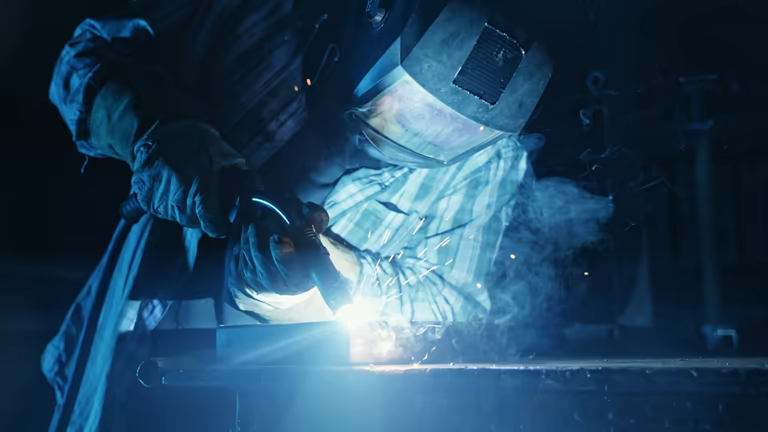
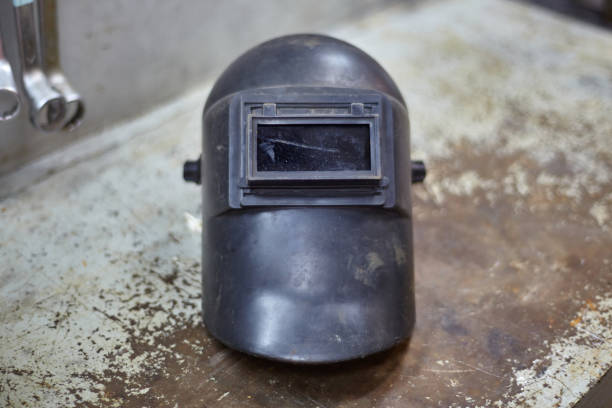
If you’re a professional welder, you’re probably very familiar with that monotonous, claustrophobic green welding goggles . For years, they’ve been standard equipment to protect your eyes from the harmful effects of arc light. However, have you ever felt that this green “filter” not only limits your field of vision but also affects your judgment of subtle changes in the weld pool, and even unknowingly exacerbates your work fatigue?
Color Technology is now quietly revolutionizing the visual experience. It liberates you from the traditional monochrome “green world,” allowing you to observe the welding process in more natural and clearer colors, much like equipping your helmet with a high-definition display.
This article will delve into the principles of true-color technology , comparing its significant visual differences with traditional green filters, exploring how it can fundamentally improve weld quality , and discussing how it can alleviate the visual fatigue long faced by welders from a neuroscience perspective . Are you ready to ditch that green fog and embrace a clearer, more realistic new era of welding?
The limitations of traditional green filters : a distorted world
Before true color technology became mainstream, all automatic light-changing (ADF) welding helmets displayed a dark green hue after activation and darkening. While this green was effective for physical protection, it was a poor messenger for visual information transmission.
The severe lack of color information and “blind guessing”
Traditional green filters are essentially narrow-spectrum filters . They allow only a very limited amount of green light to pass through, while significantly reducing key color information such as red, blue, and yellow.
The brain’s “overcompensation”
This means that during the welding process, welders can hardly distinguish the true color of the workpiece material, the color of the weld slag, or even detect the subtle orange-yellow or bluish-white variations in the molten metal in the weld pool . You can only judge the weld condition in a monochrome world, relying purely on experience and outlines. This forces your brain to perform a great deal of “overcompensation” and “blind guessing,” significantly increasing the difficulty of judgment and the risk of error.
Compromise between detail and contrast
Because color information is suppressed, traditional green filters also directly affect visual contrast and the ability to capture details.
Hidden flaws and blurred edges
Under the dominance of a green filter, weld edges, the flow path of the molten pool, and potential welding defects (such as lack of fusion and porosity) appear less sharp and clear. The dominant green hue significantly reduces contrast between areas , making it difficult for welders to accurately control the angle of the welding torch, wire feed speed, and the temperature of the molten pool. It’s like looking at a photograph with only green pixels; crucial details are blurred by the filter , directly threatening weld quality .
The culprit behind chronic fatigue: the extra burden on the brain
Working for extended periods in a monotonous and information-poor green environment is a constant stress test for welders’ eyes and brains.
Visual fatigue and concentration crisis
Because the visual information received is incomplete, your brain must continuously work, attempting to construct a complete and comprehensible picture through association and guesswork. This continuous, implicit “overworking” leads to more eye fatigue and soreness, which in turn affects concentration and may even cause headaches. This not only reduces work efficiency but also increases the risk of accidents caused by distraction.
True Color Technology : A More Realistic and Efficient Welding World
True Color technology lies in breaking through the traditional narrow-spectrum filtering. Through precise optical coating, it allows a wider visible spectrum to pass through the filter without sacrificing protective performance.
Restore true colors: Enhance visual accuracy and control
True Color technology lies in its ability to make the colors you see in dim light more closely resemble those under natural light.
Rich color saturation and temperature judgment
using true-color technology allow you to clearly distinguish the base color of the metal, the color of the weld slag, and the orange-yellow and red areas of the hot metal in the weld pool . This significant improvement in color saturation allows you to more intuitively and accurately determine the type of welding material, the temperature of the weld pool, and the melting state. This brings a huge advantage to processes like TIG and MIG, which require precise temperature control.
Detail Sharpening : A Powerful Tool for Precise Control of Weld Quality
The increased color information directly leads to a qualitative leap in contrast . The contours of the weld edges, the flow trajectory of the molten pool, and the width of the weld bead all become clearer and sharper. This means that welders can make more precise adjustments to the movement of the welding torch and the shape of the molten pool , making it easier to identify and correct potential defects, thereby directly raising the quality of the weld to a new level.
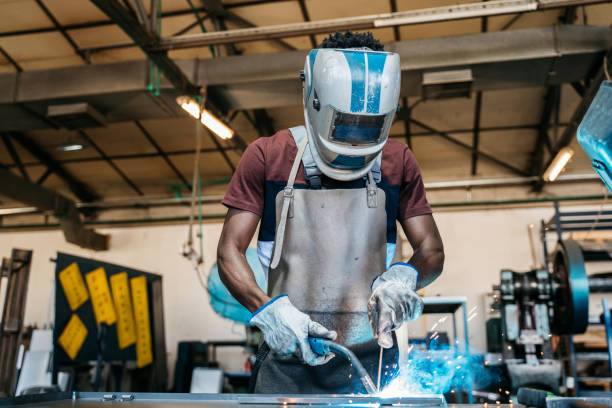
Relieve visual fatigue: Improve work comfort and efficiency
true color technology is often regarded as one of its most important added values.
“Reducing the burden” on the brain and maintaining focus
When the eyes receive more natural and complete color information, the brain no longer needs to fill in the missing details. This reduction in cognitive load significantly alleviates eye fatigue. Welders can maintain high levels of concentration for longer periods, improving work efficiency while reducing judgment errors caused by visual fatigue.
Improving safety and occupational health
A more comfortable visual experience means that welders will experience a significant reduction in symptoms such as dry and sore eyes after long hours of work. This not only improves overall work comfort but also protects welders’ occupational health , indirectly reducing safety accidents caused by fatigue and vision problems.
Summary and Reflection: From Tools to Artists – A New Perspective
The true-color technology in welding helmets is not just a marketing gimmick. It’s a natural consequence of the evolving demands for precision, efficiency, and health in modern welding processes . By providing you with a more realistic visual experience, it not only significantly improves the quality of your welds but also reduces eye strain , allowing you to maintain focus and health for longer periods during the demanding work of welding.
When choosing your next welding helmet , consider TrueColor Technology as a long-term investment in your career .
Reflection and Questions: Have you experienced the visual differences brought by true color technology ? Do you think a clearer weld pool visual effect improves weld quality more for you in MIG or TIG welding ? Please share your thoughts in the comments section!